Wednesday, January 12, 2011

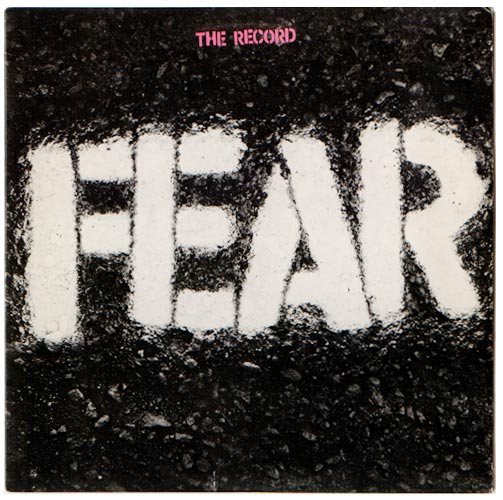
The Fear Inside Of You

Do you have any fears? Of course you do. Everyone does. It is just a part of our human nature and there is nothing we can do to prevent it. The only thing we can do is to confront our fears "face to face" and get over our fears to make ourselves better persons. Hiding from the fear that is deep inside of you will not do you any good and will result to a life of fear. We must know how to face it and stand up for ourselves. If you ignore fear, it won't go away. Here are some of the fears that most people are afraid to confront:

  1. Arachnophobia- fear of spiders
  2. Haemaphobia- fear of blood
  3. Acrophobia- fear of heights
  4. Testophobia- fear of exams
  5. Catoptrophobia- feaer of mirrors
  6. Chaetophobia- fear of hair
  7. Pteronophobia- feaer of being tickled by feathers
  8. Ergophobia- fear of work
  9. Cancerophobia- fear of cancer
  10. Necrophobia- fear of corpses
  11. Nosophobia- fear of disease
  12. Ommatophobia- fear of eyes
  13. Leprophobia- fear of Leprosy
  14. Genophobia- fear of sex
  15. Odontophobia- fear of teeth
  16. Traumatophobia- fear of wounds
  17. Toxiphobia- fear of poison
  18. Psychophobia- fear of the mind
  19. Erotophobia- fear of Physical Love
  20. Tocophobia- fear of Child Birth

First, what is fear? 


Emotions are a part of our day to day lives. We can not avoid them and our life will be boring without them. One of those emotions is fear. Fear is that emotion which makes us afraid and it is an instinctive response to a potential threat. It is also defined in the dictionary as the feeling of agitation and anxiety  that is caused by the presence or imminence of danger or harm and as an extreme reverence or awe, as toward a higher or supreme power. When a person is afraid, the amygdala and the hypothalamus (both parts of the brain) immediately active to control the physical response of fear. Chemicals in the body such as adrenaline and cortisol (stress hormone) are released into the bloodstream to cause physical reactions like:

  • Rapid heart rate
  • Increased blood pressure
  • Tightening of muscles
  • Sharpened or redirected senses
  • Dilation of the pupils (to let in more light)
  • Increased sweating
Fear can paralyze you and stop you from achieving your goals. People who experienced fear will often remember that moment when a disaster struck and how time seemed to slow down. Without even thinking about, they would perform superhuman feats that no one can even imagine like lifting a car just to save your loved one without experiencing any pain. The human body has two main responses when it comes to fear and confronting danger: fight or flight.


The Fight or Flight Response

The "fight or flight response" is our body's automatic response that prepares to body to fight or run away from a threat to our survival. When this response has been stimulated, chemicals like adrenaline, noradrenaline and cortisol are released into the bloodstream. Our respiratory rate will increase, blood is shunted away from our digestive system and into our muscles which is needed for us to either fight or run. Our pupils dilate and our awareness intensifies. Our sight becomes sharper and our impulses will quicken. We will feel pain a little less and the immune system mobilizes with increased activation. Our body becomes prepared physically and psychologically for the fight or for the flight. If the body chooses to fight, the body will transform into an aggressive, combative state in which the body prepares to battle the threat (Learning how to fight and practicing martial arts would help a lot if the body chooses this response). Otherwise, if the body chooses to flee away from the danger zone, it will withdraw from the environment and seek a safer place before cooling down (A little Parkour wouldn't hurt). This are the main responses during danger situations.


Fight


or


Flight


Overcoming our Fears

Overcoming fear will not come to you. You should go to it. Nothing will happen if you just stand around doing nothing if your afraid. Being scared is common. What is not common is that only a few people are willing to face their fears no matter how scared they are. No one ever accomplished anything sitting down and doing nothing. Get out there and go conquer your fear. Do not let any external factor from keeping you to face your fears. We must become versatile enough to not let fear stand in the way of us completing our goals. Never let fear run your life. It is your life, so it is your show. Do not let that fear keep you from doing things that will be better for your growth. Courage is needed for all of this things to happen. Courage is not exactly the absence of fear, but it is the willingness to confront fear no matter the situation. Courage or Bravery is the ability to confront fear, pain, danger, or uncertainty without hesitation. Physical courage is courage in the face of physical pain, hardship, death, or threat of death, while moral courage is the ability to act rightly in the face of popular opposition, shame, scandal, or discouragement. This two kinds of courage are the main weapons in battling fear. No matter what the cost will be, if we face our fears without any hesitations, the rewards will be a hundred times better and as a bonus, you will be less afraid of that certain moment if it happens to pass you by again. 


This is the end of my blog about the emotion fear.

"Courage is endurance for one moment more ..."
-Unknown Marine Second Lieutenant in Vietnam
"Courage is not the absence of fear, but rather the judgement that something else is more important than fear."
-Ambrose Redmoon
"The Greatest barrier to success is the fear of failure"
“Each time we face our fear, we gain strength, courage, and confidence in the doing.”

Friday, January 7, 2011

One Mind, Any Weapon


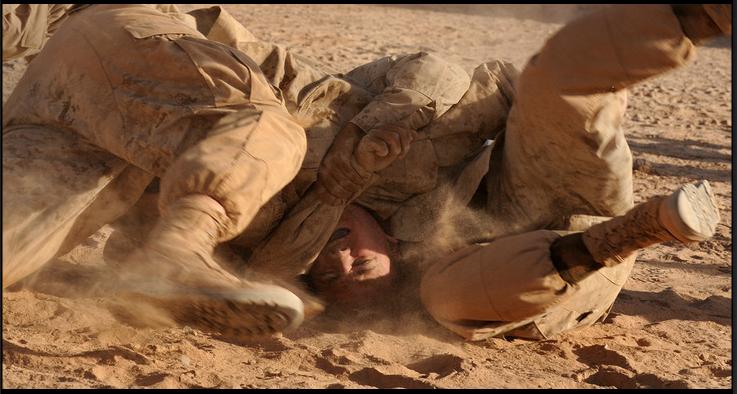
MCMAP ( Marine Corps Martial Arts Program) is a combination of hand-to-hand CQC ( Close Quarters Combat) technique developed by the US Marine Corps that they call the "Warrior Ethos". This program trains Marines and US Navy personnel attached to Marine Units in unarmed combat, edged weapons, weapons of opportunity and rifle and bayonet techniques. It also teaches them the mental and character development including responsible use of force, leadership and teamwork. It has been given some nicknames like semper fu (a portmanteau of the USMC's motto "semper fi" and "kung fu"), MCSlap, MCNinja, and the New Bushido.


This is how the fighting style came about:

The goal of the USMC in combat is to close with, and destroy the enemy, by fire and maneuver, and assault by fire and close combat. A Marine has always been feared for his aggressiveness and lack of fear no matter the circumstances. All this are taught to all men and women upon recruit training, where they will also learn MCMAP.


The Program undergone a lot of changes through the years. The Corps developed a martial arts program that has yet to be rivaled. It all began with the Continental Marines, who were known to be expert marksmen of Naval Ships, to their skills as boarding and landing parties with their rifle, sword, and bayonet. The Marines tried to develop their skills the succeeding years. Before and during the First World War, the bayonet skills were supplemented with the training of unarmed combat techniques especially in trench warfare.Guided by leaders, the Marine Corps developed a spirit that is now known today as Honor, Courage, and, Commitment.


This Training continued to evolve up to World War II. As World War II called upon the Marine Corps, individuals developing specialized training based upon the experiences of Marines from the inter-war years, including exposure by Marines that were stationed overseas, who had the opportunity to study far eastern martial arts systems such as judo, karate, and jujitsu. The techniques of Major Dermot O'Neill and Lieutenant Colonel Rex Applegate were introduced to Marine units and all of these were employed by Marines during the Island Hopping Campaigns in the Pacific. Additionally, the rapid expansion of the Marine Corps saw a refinement to the Marine's character and leadership programs.


During the post-Vietnam War, the Marine Corps needed to make changes and develop a new martial arts system. In 1980, the USMC developed the LINE System (Linear Infighting Neurological Overriding Engagement). The Line System,was an important step in the evolution of a Marine Corps specialized martial art. The concept of the LINE system was that when attacked the defender would destroy the enemy's attack by manipulating joints, breaking joints, and damaging nerves. The pain that was inflicted on the enemy would cause his Central Nervous System to go into break down, disrupting all continuous thought process.


In 1996, a review of the LINE system was conducted on how effective it was from lessons learned and due to the mission of the Marine Corps changing from combat operations to Missions Other Than War (MOTW), and peace keeping missions, there was need for a new system that would adapt to different situations and fit the mission that the specific unit has. There would be a difference of a Marine between defusing a conflict during peace time and defusing it during hostile environment. General Jones, the Commandant of the Marine Corps at that time, gave specific orders on his vision of a Martial Art Combat Program, as well as other programs outside the Marine Corps that would best fit the needs and mission of the Corps. General Jones wanted a martial art program that could be used in any environment, terrain, or situation. He also wanted something that would keep a Marine naturally competitive. General Jones chose 10 subject matter experts from numerous martial arts disciplines to develop the Marine Corps Close Combat Program currently used by the Marine Corps. 


The 3 Disciplines of MCMAP:


MCMAP is a synergy of mental, physical and character disciplines. MCMAP was implemented to increase combat efficiency, as well as to increase the confidence and leadership abilities of Marines. Marines are required to develop the mind, body and spirit simultaneously and equally. Safety is also important, so equipment such as mouthguards and pads are used in conjunction with techniques such as half-speed practice and break-falls to prevent injury during training.


Mental
Warrior Studies focus on individuals that have shown exemplary service on the battlefield, as well as discussion and analysis of combat citations. Martial Culture Studies focus on societies that make the Marine warriors either primarily or exclusively. Some of the martial cultures that are studied are the Marine Raiders, Spartans, Zulu and Apache. By studying these cultures, Marines learn fundamental tactics and methods of the past and reconnect themselves with the warrior ethos of the Marine Corps. Combative Behavior studies interpersonal violence, as well as Rules of Engagement and the Force Continuum, which dictates when and how much force can be used in response to the mission, up to and including lethal force. 


Character
Development of this discipline involves discussion on Marine Corps core values, ethics, and good citizenship. An instructor can fail a Marine if he or she feels that the student does not adequately possess honor, courage, and commitment. Some belts also require the approval of the commanding officer before awarded. The force continuum is discussed, allowing a Marine to responsibly use the minimum amount of force necessary, including lethal force. Leadership qualities are also stressed.


Physical
In MCMAP, only a third of the training involves techniques and physical development. The physical discipline includes the training of fighting techniques, strength, and endurance. This discipline also includes sustainment of skills and techniques already taught, in order to improve skill as well as develop weak-side proficiency. Ground fighting, grappling, pugil fights, bayonet dummies, and other techniques are used to familiarize Marines with the application of the techniques used. In addition, physical strength and endurance are tested and improved with various techniques that often require teamwork or competition, such as calisthenics, running with full gear, log carries, and boxing matches. Techniques can also be practiced in water or in low-light conditions to simulate combat stress.


Techniques


Tan Belt

The tan belt syllabus focuses on the development of the basics of armed and unarmed combat. Students start with the Basic Warrior Stance and break-falls are taught for safety, then move to:
  • basic punches, uppercuts, and hooks
  • basic upper-body strikes, including the eye gouge, hammer fists, and elbow strikes
  • basic lower-body strikes, including kicks, knee strikes, and stomps
  • bayonet techniques
  • basic chokes, joint locks, and throws
  • counters to strikes, chokes, and holds
  • basic unarmed restraints and armed manipulations
  • basic knife techniques
  • basic weapons of opportunity
Students must prove proficiency with 80% of 50 techniques to pass and earn their belt. The tan belt syllabus is part of The Basic School and recruit training curriculum.


Gray Belt

The gray belt syllabus expands on the basic techniques with:
  • intermediate bayonet techniques
  • intermediate upper-body strikes including knife-hands (karate chops) and elbow strikes
  • intermediate lower-body strikes including kicks, knee strikes, and stomps
  • intermediate chokes, joint locks, and throws
  • counters to strikes, chokes, and holds
  • intermediate unarmed restraints and armed manipulations
  • intermediate knife techniques
  • basic ground fighting
  • intermediate weapons of opportunity


Green Belt

The Green belt technique shifts focus from defensive to offensive techniques with:
  • intermediate bayonet techniques
  • muscle gouging
  • intermediate chokes, joint locks, and throws
  • counters to strikes
  • intermediate unarmed manipulation
  • intermediate ground fighting
  • advanced weapons of opportunity


Brown Belt

  • advanced bayonet techniques
  • advanced ground fighting and chokes
  • advanced throws
  • unarmed vs. hand held weapons
  • firearm retention
  • firearm disarmament
  • advanced knife techniques


Black Belt 1st Degree

  • advanced bayonet techniques
  • advanced chokes, holds, and throws
  • advanced ground fighting
  • basic counter firearm techniques
  • advanced upper-body strikes, including strikes and smashes
  • advanced knife techniques
  • pressure points
  • improvised weapons

Black Belt 2nd Degree

  • rifle vs. rifle
  • short weapon vs. rifle
  • unarmed vs. rifle
This is MCMAP. MCMAP, for the USMC, could be the decisive factor between life or death. These men and women sacrifice their lives to make the world safe so never belittle them in any way.

*a special thanks to wikipedia for the information regarding the disciplines and the techniques of MCMAP*


Saturday, January 1, 2011

Start the Year with a BANG!

Happy New Year!! Today is the first day of 2011 and the whole world is going to celebrate the coming of this year. Everybody has their own way of celebrating their New Year and it is one of my favorite holidays. Each one observes some New Year traditions. Here are some of them:

Eating Lucky

  • Black-eyed peas and lentils eaten on New Year’s Day are said to wealth and safety for the whole year.
  • Eat 12 grapes, one grape for each month of the year, for prosperity.
  • Eating pork on New Year’s Day is lucky because pigs eat moving forward. Therefore, those who eat pork will move forward in the coming year.

Lucky Fashion

  • Wear something new on January 1st. It means that new clothes will be brought to you.
  • Wear red underwear on New Year’s Eve to bring luck.
  • Wear red clothing on New Year’s Day.

Acting Lucky on New Year's Eve

  • Every door and window should be left open at midnight on to let the old year out.
  • Make lots of noise at midnight. Evil spirits attempt to come into the brand new year at this time – horns and whistles chase them away.
  • Dancing around a tree ensures luck, love, and prosperity.
  • There should be money in your pocket at midnight.
  • The pantry should be well stocked.
  • Kissing your spouse or significant other at midnight ensures that you will remain intimate with that person. To not kiss means a cold relationship for the year.
  • A woman shouldn’t speak until a man says "Happy New Year."

Acting Lucky on New Year's Day

  • A first-footer is the first person through the door after the stroke of midnight. This person should be a good-looking, dark-haired man. He has to knock and be let in. He would ideally be carrying a piece of coal so the house will always be warm, bread so the household will always have food, money, and greenery for long life. The first-footer brings extra luck if he happens to have a high in-step.
  • The first words you hear in the minutes of the New Year will set the precedence for the entire year.
  • Do something you are good or successful at on New Year’s Day. This will tell how the rest of the New Year will go.
  • Any baby born on New Year’s Day has good luck the rest of his/her life. The baby also brings good luck to the family.
  • Nothing goes out. The flip version of this rule is that nothing goes out until something new comes in.
  • No money should be spent.
  • No sweeping or dusting the first day of the year. The good luck could be swept out. If you have to sweep, you should sweep towards the center of the house and use a dust pan.
  • No crying January 1st, or you will be crying all year long.

Being Superstitious

  • First-footers can’t have flat feet, be cross-eyed, or have eyebrows that meet in the center.
  • A first-footer can’t have blond or red hair, and a woman first-footer would be disastrous.
  • Poultry should never be eaten on January 1st. Poultry scratch for their food, so those who eat poultry will "scratch" for their food all year.


Wednesday, December 22, 2010

The Hidden Rifles: Sniper Rifles

Here is a Top 10 list of the World's Deadliest Sniper Rifles
(list taken from the TV series "Ultimate Weapons")

The Ulitmate Sniper Rifles:

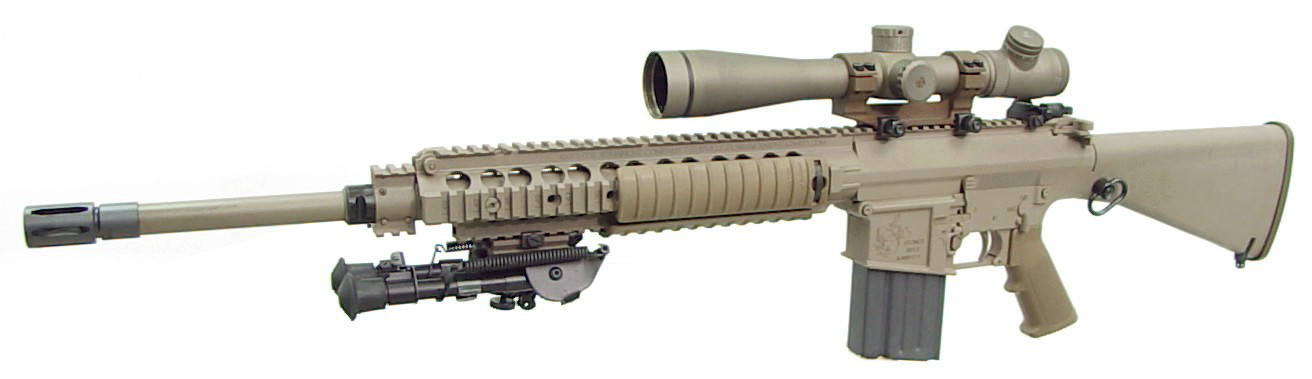
10. Knight's Armament M110


Cartridge: 7.62x51mm NATO
Action: Gas Operated, rotating bolt


Weight: 16 lbs.
Length: 40.5 in (buttstock fully compressed),
              46.5 in (buttstock fully compressed and suppressor attached)
Barrel length: 20 in.
Rate of Fire: Semi-Automatic
Effective Range: 800 meters
Feed System: 10 or 20-round detachable box magazine
Place of Origin: USA
Service: War in Afghanistan, War in Iraq
Manufacturer: Knight's Armament Company

9. LWRC SABR 308
Cartridge: 7.62x51 mm NATO
Operation: Short-Stroke Gas-Piston
Weight: 8.2 lbs.
Effective Range: more than 1000 yards
Rate of Fire: Semi-Automatic
     This Sniper Rifle was developed for the US Special Forces. This rifle can be used for close quarters combat and long range shooting which helps the sniper to get to position without carrying 2 guns. The SABR stands for the Sniper Assault Rebuttal Rifle.

8. Mcmillan Tac 50
Cartridge: .50 BMG
Operation: Rotary Bolt Action
Weight: 26 lbs.
Length: 57 in.
Barrel Length: 29 in.
Effective Range: 1600 meters
Feed System: 5 round detachable box magazine
Manufacturer: McMillan Brothers Rifle Co.
Service: War in Afghanistan
Place of Origin: USA
     Two Canadian snipers of the Princess Patricia's Canadian Light Infantry regiment sniper team made the longest recorded sniper kills in history with this weapon in Afghanistan during Operation Anaconda, in the Shah-i-Kot Valley. In March 2002, Master Corporal Arron Perry killed an enemy combatant from 1.435 miles and Corporal Rob Furlong killed an enemy combatant from1.509 miles with 750 grain Hornady A-MAX very-low-drag bullets. These were the longest recorded kills by snipers in combat.

7. M40
Cartridge: 6.5x47 LAPUA
Operation: Bolt Action
Weight:  M40A1: 14.48 lb
               M40A3: 16.5 lb
Length:  M40A1: 43.97 in
               M40A3: 44.25 in
Barrel length: 610 mm (24 in) (1:12 right hand twist)
                        M40A1: Hart (6 lands and grooves)
                        M40A3: Schneider Match Grade SS #7 (6 lands and grooves)
Effective Range: 1000 yards
Feed System: 5-round integral box magazine
Sights:  Scout Sniper Day Scope (SSDS)
Manufacturer:  United States Marine Corps, Remington
Place of Origin: USA
Service:  Iraq War, War in Afghanistan, Gulf War, Invasion of Grenada, Multinational Force in Lebanon, Vietnam War.
    The M40 is a bolt-action sniper rifle used by the United States Marine Corps. It has four variants — the M40, M40A1, M40A3, and M40A5. The M40 was introduced in 1966. The changeover to the A1 model was completed in the 1970s, the A3 in the 2000s, and the A5 in 2009.
Each M40 is built from a Remington 700 bolt-action rifle, and is modified by USMC Armorers at Marine Corps Base Quantico, using components from a number of suppliers. New M40A3s are being built, and A1s are upgraded to A3s as they rotate into the armory for service and repair.

6. Stealth Recon Scout
Cartridge: .243 Winchester
                  7.62x51 mm (.308 Winchester)
                  .300 Winchester Magnum
                  .338 Lapua Magnum
Action: Bolt Action
Weight: 11.5 lb (.243 Winchester)
              11 lb (7.62x51 mm)
              12 lb (.300 Winchester Short Magnum)
              12.37 lb (.338 Lapua Magnum)
Length: 33.5 in (.243 Winchester)
              31.5 in (7.62x51 mm)
              35.5 in (.300 Winchester Magnum)
              37.5 in (.338 Lapua Magnum)
Barrel Length: 24 in (.243 Winchester)
                          22 in (7.62x51 mm)
                          26 in (.300 Winchester Magnum)
                          26 in (.338 Lapua Magnum)
Feed System: 5-round detachable box magazine (.338 Lapua Magnum)
                       6-round detachable box magazine (.300 Winchester)
                       7-round detachable box magazine (.243 Winchester, .308 Winchester)

Sights: Telescopic Sight
Manufacturer: Desert Tactical Arms
Place of Origin: USA
     The Stealth Recon Scout is notably unusual in that it is one of the few rifles that has a bullpup bolt-action layout. This gives the rifle a relatively compact design; claimed to be 11 inches shorter than conventional sniper rifles.


5. Accuracy International AS-50
Cartridge:12.7x99 NATO
Caliber: .50 BMG
Operation: Semi-Automatic
Weight: 31 lbs.
Length: 53.9 in.
Barrel Length: 692 mm
Effective Range: 1500 meters
Feed System: 5 or 10 round detachable box magazine
Place of Origin: United Kingdom
Manufacturer: Accuracy International
     The AS50 enables operators to engage targets at very long range with high accuracy using explosive or incendiary ammunition. The AS50 employs a gas operated semi-automatic action and muzzle brake, allowing for lower recoil than the AW50 bolt action rifle and faster target acquisition.

4.  Model 99 .416 Barrett


.416 Barrett                                                    Barrett M99
Projectile: .416 (396 grains)                          Operation: Single Shot Bolt Action
Bullet Diameter: .416 in.                               Weight: 25 lbs. or 23 lbs.
Neck Diameter: .465 in.                                Length: 50 in. or 47 in.
Shoulder Diameter: .732 in.                          Barrel Length: 32 in. or 29 in.
Base Diameter: .797 in.                                Cartridge: .50 BMG
Case Length: 3.27 in.                                                       .416 Barrett
Overall Length: 4.58 in.                                Effective Range: 2600 meters
Case Capacity: 13 cm³                                  Feed System: Single Shot
Designer: Ronnie Barrett                             Manufacturer: Barrett Firearms Co.
Place of Origin: USA                                     Place of Origin: USA

3. Accuracy International AWSM

Caliber: .338 Lapua Magnum
Operation: Bolt Action
Weight: 14.9 lbs.
Length: 1200 mm (.300 Win. Mag.)
              1230 mm (.338 Lapua Magnum)
Barrel Length:  26 in. (.300 Win. Mag.)
                           27 in. (.338 Lapua Magnum)
Effective Range: 1,100 metres (.300 Winchester Magnum)
                             1,500 metres (.338 Lapua Magnum)

Feed System: 5-round detachable box magazine


Service: Afghanistan War, Iraq War
Manufacturer: Accuracy International
Sights: detachable aperture type iron sights day or night optics
Place of Origin: United Kingdom

2. Barrett M107


Cartridge: 12.7x99 mm NATO
                   .416 Barrett
Operation: Short Recoil
Rate of Fire: Semi-Automatic
Weight: 29.7 lbs.
Length: 57 inches (with 29 inch barrel)
              48 inches (with 20 inch barrel) (M82A1)
Barrel Length: 29 inches
                          20 inches
Effective Range: 1800 meters
Feed System: 10-round detachable box magazine
Sights:  Fixed front, adjustable rear sight; MIL-STD-1913 rail provided for optics
Manufacturer: Barrett Firearms Manufacturing
Place of Origin: USA
     The M82 (called as the M107 by the military) is a recoil-operated, semi-automatic anti-materiel rifle developed by the American Barrett Firearms Manufacturing. A heavy SASR (Special Application Scoped Rifle), it is used by many armies around the world. It is also called the "Light Fifty" for its .50 caliber BMG chambering.

 1. CheyTac M200 Intervention LRSS
Cartridge:.408 CheyTac
                  .375 CheyTac
Operation: Bolt Action
Weight: 27 lbs.
Length: 53 in  (stock extended)
              46¾ in (stock collapsed) (M-200)
Barrel Length:  29 in. (standard w/ 1:13 twist M-200)
                           26 in. (optional)
Effective Range: 2000+ meters (M-200)
                             2000+ meters (M-200 Carbine)
                             1500+ meters [M-200 CIV (Civilian)]
Feed System: 7-round detachable box magazine
Sights: Day Optics/ Night Optics
Designer: Randy Kobzeff
Manufacturer:  CheyTac LLC and Randy Kobzeff
Place of Origin: USA


Thursday, December 16, 2010

Stealthy and Deadly

The Scout Snipers


U.S. Marine Corps Scout Snipers are highly trained Marines, professionals in sniping, reconnaissance, and marksmanship. Scout Snipers have a secondary Military Occupational Specialty code of MOS 0317 that can be earned by both Infantry and Reconnaissance Marines.  These men deliver long range precision fire at a designated target from concealed positions to give fire support to ground troops. The Scout Sniper Motto is "One Shot, One Kill".

Scout snipers have two main roles. One is to use precision weapons to deny the enemy freedom of movement and disrupt their operations by shooting key personnel such as commanders, radio operators, messengers, and other high ranking officials. They may also take out hard targets such as communications equipment, armored vehicles, and generators. The other role of the Scout Snipers is to carry out reconnaissance and surveillance operations for their assigned battalion.

Scout snipers are part of a Scout Sniper Platoon, which is an element of the headquarters and service company of their assigned battalion. Each SSP is made up of 8-10 2 man sniper teams. A Scout Sniper team consists of:


1. Scout Sniper Leader/ Spotter is equipped with a M40 rifle and he will also carry a high powered spotting scope.

2. Scout Sniper is armed with a high-caliber anti-material rifle.

There are 3 phases of training in the Scout Sniper School:

1. Marksmanship and Basic Fields Craft Phase
     During this phase Marines are trained in basic marksmanship on the Known Distance Range and also receive classes on basic skills such as camouflage, individual movement, weapons systems, observations, and field sketches.

2. Unknown Distance and Stalking
     The UKD (Unknown Distance) and Stalking portion starts as soon as Phase 1 is completed. During this phase students will become experts at engaging targets at unknown distances by way of range estimation and range cards.

3.  Advanced Field Skills and Mission Employment

 The USMC Scout Snipers are currently stationed in some of the most hostile environments in the world like in Iraq and Afghanistan.


Saturday, December 11, 2010

The Few, The Proud


The Few, The Proud, The Marines. This is one of the quotes used to describe the USMC. The United States Marine Corps is a branch of the United States armed forces responsible for providing power projection from the sea, using the mobility of the United States Navy to deliver combined-arms task forces rapidly. It is one of seven uniformed services of the United States. In the civilian leadership structure of the United States military, the Marine Corps is a component of the United States Department of the Navy, often working closely with U.S. naval forces for training, transportation, and logistic purposes; however, in the military leadership structure the Marine Corps is a separate branch.
The USMC participated in several wars. One of the most important wars that included the Marines was World War II. They might not have been in the front lines in Europe but they were in the Pacific theatre of War. They battled the Japanese long and hard almost each day during World War II. Perhaps without their help, the war in the Pacific may have turned out differently and the Japanese may be a big empire if it weren't for  the Marines intervening.
Today, they are fighting in the urban cities of Iraq and other countries where terrorism exists. They are "THE FIRST TO FIGHT" as many people consider them. They encounter insurgents and terrorists in some of the most hostile environment ever. They are the front lines and everybody after them just clean up what the Marines missed (which I doubt).
There are different MOS (Military Occupational Specialty) that the Marines have to offer. Out of all the different MOS, my favored is MOS 0317 or more commonly known to the Marines as the Scout Snipers. Marines who qualify for Scout Sniper School alway recieve rigid training which requires physical and mental strength. You have to be a First Class Private and shoot as expert marksman to qualify.

 Before you can consider yourself as a Marine, you have to undergo the ASVAB (Armed Services Vocational Aptitude Battery), pass a PFT (Physical Fitness Test), and go through boot camp.
“Semper Fi”. This is a Marine quote that means Always Faithful. Another Marine quote that is connected to this is “Once a Marine, Always a Marine”. This shows a deeper relationship between fellow Marines. Marines do not only consider their fellow Marines as squadmates, they consider them as brothers. The USMC is a brotherhood of Marines that no one but the Marines can fully understand. Once you have forged a relationship between your brother Marines, it will be unbreakable. 

These are all the things that I have to say about the USMC. Never forget what the Marines did to make the world a better and safer place for everybody to live in.

Freedom is not free, but the U.S. Marine Corps will pay most of your share. 
-Ned Dolan
Marines know how to use their bayonets. Army bayonets may as well be paper-weights. 
-Navy Times; November 1994
The United States Marine Corps, with its fiercely proud tradition of excellence in combat, its hallowed rituals, and its unbending code of honor, is part of the fabric of American myth. 
-Thomas E. Ricks; Making the Corps, 1997


Thursday, December 2, 2010

Vaulting Obstacles

Today, I will be talking about 3 basic vaults used in parkour. These vaults were made so as to be more efficient in jumping over obstacles (known as vaults to traceurs). Together with some information about the vaults, I will include some videos to show you how these vaults look like in action. I will talk about the Monkey Vault, the Dash Vault, and one of my favorites, the Lazy Vault.

Monkey Vault
  1. Run up to the object you are vaulting at a steady pace. You will soon learn how fast or slow you need to go to make the vault. Look where you will place your hands on the surface of the object.
  2. Place your hands on the object which should have space for you to move.
  3. You have to almost jump and tuck your feet in, but letting your arms do the work. Once your feet have became parallel with your arms, you have to let go of the surface, by pulling your arms up so they are in the air.
  4. Land and continue running.


Dash Vault

  1. Run towards the obstacle at a reasonable clip: something more than a jog but a little less than a full run. Keep an eye on a good place to plant your feet for the vault, somewhere about a yard or so from the obstacle.
  2. Place your feet on the chosen spot, making sure they are steady enough to support your weight, but flexible enough to help you move into the dash vault. Bend your knees slightly as you make the plant: you will use them to push off into the jump.
  3. Jump both forwards and upwards, using your legs to propel you over the obstacle. You want to watch your height just as much as your distance--the instinct is to focus too much on forward momentum without paying attention to upward lift. You want to make sure you are jumping high enough to clear the obstacle completely.
  4. Move your legs in front of you and to the side as you vault over the obstacle. You want them to be clear of the obstacle and in front of your hands and arms. One trick is to make the dash vault as if you are planning on sitting on top of the obstacle rather than jumping over it: this will put your legs in the right position.
  5. Push down and out on the top of the obstacle with your hands as you move over it. This helps you propel outwards and prepares you for the landing.
  6. Center your gaze on the piece of ground where you intend to land. Keep your eyes focused on it as you perform your dash vault.
  7. Point your toes down and land on the balls of your feet. As you do so, you should bend your knees again to help cushion the impact and push forward to shift your momentum in the direction you intend to move. This will allow you to transition smoothly from the dash vault to perform another parkour maneuver of your choice.


Lazy Vault

  1.  Prepare yourself to complete a lazy vault by perfecting your balance. Find a low wall or rail that's about waist height.
  2. Practice balancing your weight on one arm. To do this, stand with one hip facing the wall or rail, slightly tuck in your elbow to your ribs, and jump up and shift body weight on your arm. Be sure to jump at an angle towards the wall. When you do the lazy vault, this will be your take-off arm.
  3. Create momentum with your leg to help you get the height necessary to get over the rail or wall. This is done by kicking and swinging your leg towards the wall. Begin with the balance jump you've perfected in Step 1. As you jump, kick or swing the leg closest to the obstacle up to the top of it.
  4. Shift your body weight to the leg that is now on top of the rail. Bring your hips forward to bring your other leg over the top. As you do this, bring your other hand down for support.
  5. Push yourself away from the wall, rail or other obstacle after you've cleared it. This push will give you momentum to continue your run. Make sure you land on one foot and push off that foot to continue running.
  6. Practice the jump repeatedly until you can eliminate shifting your body weight to the leg on top of the rail and instead swing both legs over in a fluid movement.